

Local Rally Advocates For Those Without A Voice
At Larchmont Rally, the People at the Center Stayed Out of Sight
By Jack Ilardo · Originally published in The Globe, Mamaroneck High School
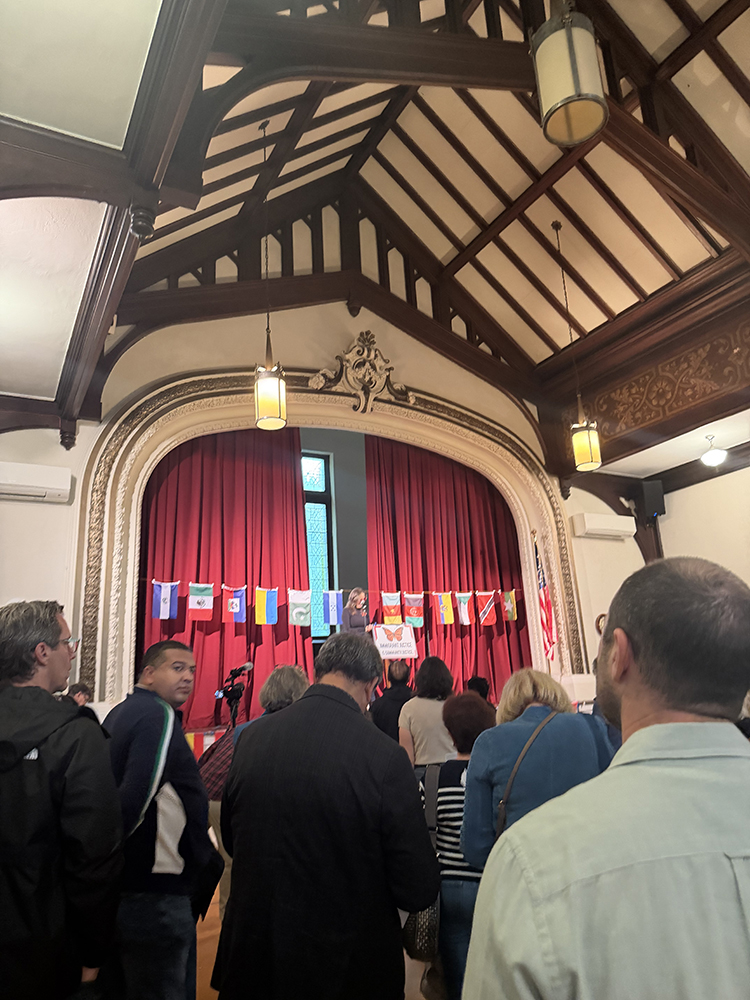
Halfway through a rally on immigration enforcement at St. John’s Church in Larchmont on Sunday, Sept. 27, Mallory Chinn stepped to the microphone to tell a story that was vitally important. A story that belonged to a woman who had decided not to share it publicly herself.
The 4 p.m. event, titled “United to End the Silence,” was organized by the Coalition for Understanding Racism through Education (CURE) alongside the Community Resource Center (CRC). It drew residents, students, clergy from three local congregations, and elected officials including State Sen. Shelley Mayer, U.S. Rep. George Latimer and Assemblyman Steve Otis, all Democrats. The rally’s premise was that much of what is happening in local immigrant communities is invisible to others.
Chinn, a Larchmont native who chairs the Mamaroneck Democratic Committee, said reading the story aloud was meant to add something statistics can’t. “A lot of times, when we’re sharing information, we get caught up in the numbers,” she said. Through the story, she wanted listeners to understand “what it really feels like to people in the community to become friends with somebody, and then lose that friend overnight.”
According to Chinn, fear is quietly changing ordinary routines. Over the summer, she said, some parents were afraid to go to camp pickups. Some are now hesitant to walk their children to school or attend classes at the CRC, worried that being seen in those places could make them a target. She was careful to note she was describing what she has heard, not what she has lived through “as a white woman,” she said.
Otis focused on the numbers: “73% of the people that have been detained have no criminal record at all,” he said, arguing that the enforcement push is not primarily about public safety. He added that much of the federal activity happens without public explanation. On where federal authority ends and state authority begins, Otis gave a more complicated answer. He acknowledged that federal law often overrides state and local law, and pointed out that many people welcomed that same federal power during the civil rights movement. His concern, he said, is what happens when federal agencies don’t follow their own rules.
Monica Trujillo, a biology professor at the City University of New York, said she worries most about the effect on students, calling the current climate “not good for learning.” Her message to people who feel unaffected came as a question. “Today, the immigrant community is the target of these policies,” she said. “The question that we ask ourselves is, who is next?”
For CURE, the rally marked a return. Nicole Alifante said the group, founded in 2018, had been largely inactive in recent years as public energy around racial justice faded. Increased enforcement, along with CURE’s long partnership with the CRC, brought it back. Planning took months, including 7 a.m. Zoom meetings twice a week.
Alifante said success would mean more Larchmont and Mamaroneck residents working with the CRC, which runs a program where volunteers accompany immigrants to check-ins and court hearings. Organizers closed by asking attendees to join an ambassador group, contact elected officials and raise the issue at school board and village meetings.
Whether residents accept that framing will shape how the issue plays out locally.

To sumbit an article or learn more about the Next Gen Community Voices program click here!
